The Profound and Life-Changing Spiritual Meaning of Altar: 7 Sacred Insights for Inner Transformation
Discover the Spiritual Meaning of Altar and explore 7 sacred insights that reveal its powerful symbolism, divine purpose, and role in personal transformation.
The Spiritual Meaning of Altar has touched human hearts for thousands of years. Across cultures and centuries, people have built altars as sacred spaces for prayer, meditation, sacrifice, and reflection. Whether made of stone in an ancient temple or carefully arranged on a small table at home, an altar represents something much deeper than wood, metal, or marble. It symbolizes connection — a bridge between the visible world and the unseen divine.
At its core, an altar is a sacred meeting place. It is where heaven and earth symbolically touch. It is where humans bring their hopes, gratitude, struggles, and dreams. In this detailed guide, we will explore the deep spiritual symbolism of altars, their role in world religions, their psychological impact, and how you can create one for your own spiritual journey.
Introduction to the Spiritual Meaning of Altar
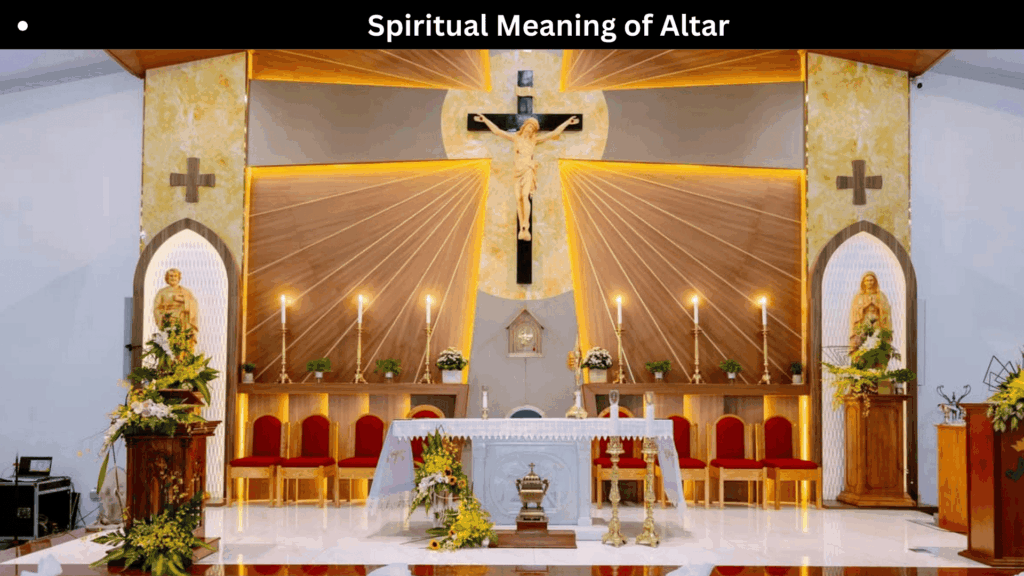
An altar is not simply a religious object. It is a sacred center. The word “altar” comes from the Latin word altare, meaning “high place.” From ancient times, people built altars on elevated ground to feel closer to the heavens.
The Spiritual Meaning of Altar revolves around three core ideas:
- Sacred connection
- Offering and surrender
- Transformation
In early human history, altars were often made of stone and used for offerings. These offerings symbolized gratitude, repentance, or devotion. Over time, altars evolved into spiritual symbols found in temples, churches, shrines, and homes.
Symbolism Behind the Altar in Spiritual Traditions
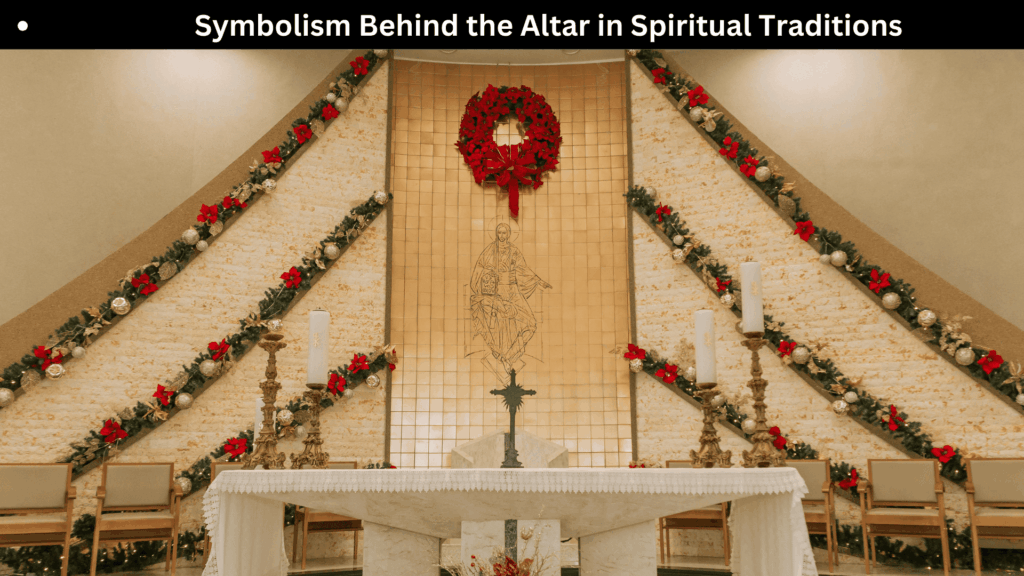
Altars symbolize divine presence. They are often placed at the center of a worship space because they represent the heart of spiritual life.
Altar as a Bridge Between Heaven and Earth
In many traditions, the altar is seen as a spiritual gateway. It connects the physical world with the spiritual realm. When someone kneels or stands before an altar, they symbolically step into sacred space.
This idea appears in the Bible, particularly in stories about patriarchs building altars after divine encounters. In Hindu temples, offerings placed on a shrine represent devotion to the divine. In Buddhist practice, a meditation altar helps focus the mind toward enlightenment.
The Concept of Sacrifice and Offering
Sacrifice does not always mean giving up something physical. Often, it means surrendering ego, pride, or negative habits. The altar becomes a place of inner change.
Spiritual Meaning of Altar in Major World Religions
Across faith traditions, altars carry deep spiritual symbolism.
Altars in Christianity
In Christianity, the altar stands at the center of the church sanctuary. It is where the Eucharist is celebrated. According to the Bible, figures like Moses built altars as acts of worship.
Today, Christian altars symbolize sacrifice, remembrance, and covenant.
Altars in Hinduism
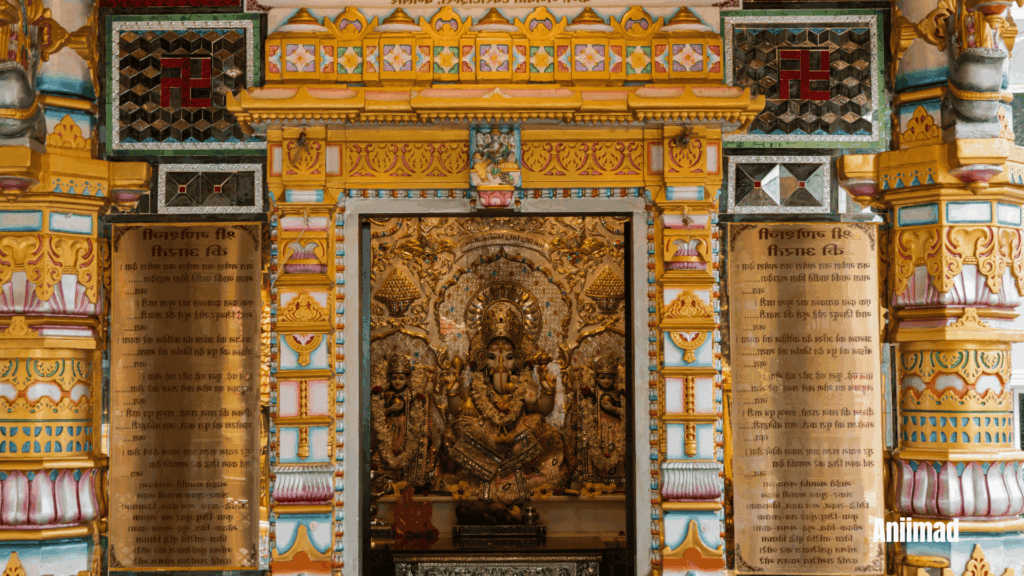
In Hinduism, home altars are common. Families perform puja (worship rituals) before small shrines dedicated to deities like Vishnu or Lakshmi.
These altars include lamps, incense, flowers, and sacred images.
Altars in Buddhism
In Buddhism, altars support meditation practice. Many include statues of Gautama Buddha, candles, and offerings of fruit or water.
Altars in Indigenous Traditions
Indigenous cultures often create nature-based altars honoring ancestors and spirits. Offerings might include tobacco, food, or symbolic objects from the land.
Psychological and Emotional Significance of an Altar
Modern psychology recognizes the value of symbolic rituals. Creating a sacred space can reduce stress and increase mindfulness.
An altar serves as:
- A visual reminder of intentions
- A calming focal point
- A grounding ritual anchor
It provides structure in chaotic times. When life feels overwhelming, returning to a sacred space restores inner balance.
Elements Commonly Found on Altars and Their Symbolism
| Element | Symbolic Meaning |
|---|---|
| Candle | Light, divine presence |
| Water | Purity, life |
| Incense | Prayer rising |
| Flowers | Beauty, impermanence |
| Sacred Text | Wisdom |
The four classical elements — fire, water, earth, and air — often appear symbolically.
Home Altars: Creating a Personal Sacred Sanctuary
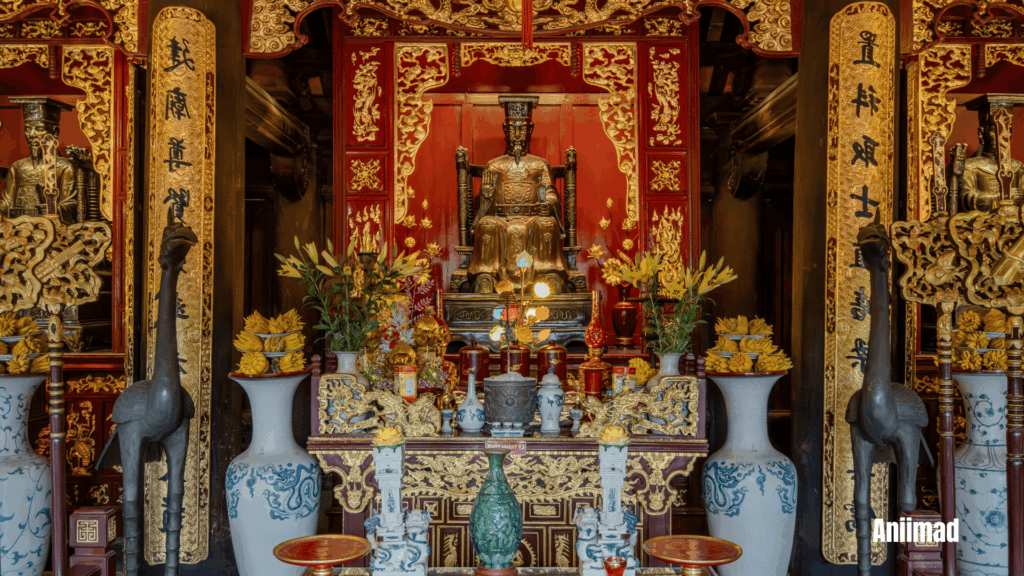
Creating a home altar is simple:
- Choose a quiet space.
- Add meaningful objects.
- Set a clear intention.
- Keep it clean and respected.
Daily practices may include prayer, journaling, or silent meditation.
Altar in Dreams and Spiritual Visions
Dreaming of an altar can symbolize spiritual awakening, commitment, or a need for reflection. A broken altar may represent neglected faith or inner conflict.
Modern Interpretations of the Altar Concept
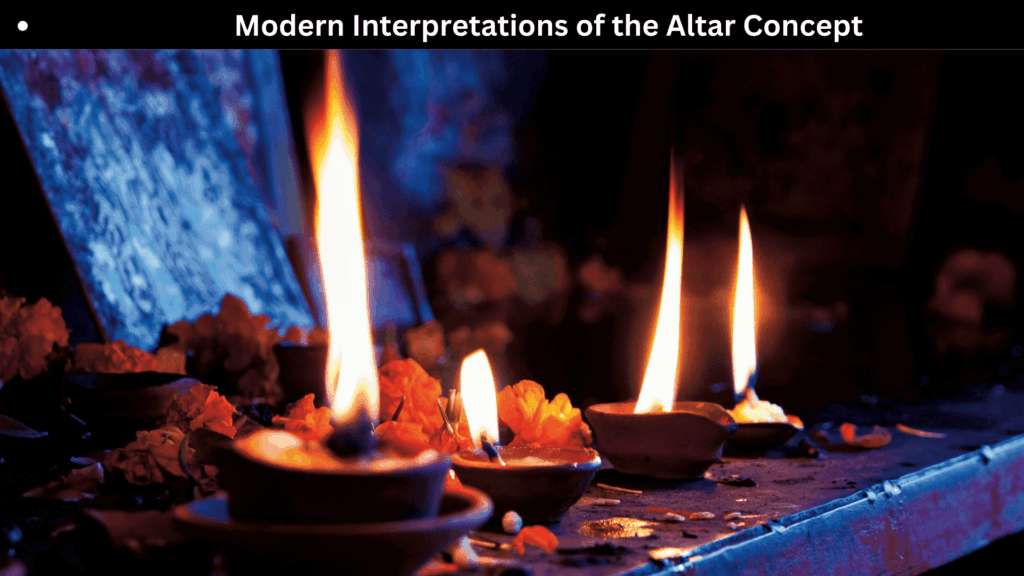
Today, altars are not limited to religion. People create:
- Gratitude altars
- Vision board altars
- Memorial altars
Even digital spaces can serve symbolic altar-like functions.
Common Misconceptions About Altars
Some believe altars are superstitious or outdated. In truth, they are symbolic tools for focus and reverence. Their power lies not in magic but in meaning.
FAQs
What is the main Spiritual Meaning of Altar?
It represents connection, surrender, and sacred encounter.
Do I need to follow a religion to have an altar?
No. Anyone can create a symbolic sacred space.
What should I place on a home altar?
Items that inspire peace and spiritual focus.
Is an altar necessary for prayer?
No, but it enhances concentration.
Can an altar help mental health?
Yes. Ritual and sacred space reduce stress.
Where can I learn more about religious altars?
You can explore historical context through resources like Encyclopaedia Britannica: https://www.britannica.com/topic/altar
Conclusion
The Spiritual Meaning of Altar continues to inspire humanity. It reminds us that sacredness is not distant. It is close, present, and accessible. An altar invites us to pause. To reflect. To surrender. And to grow.